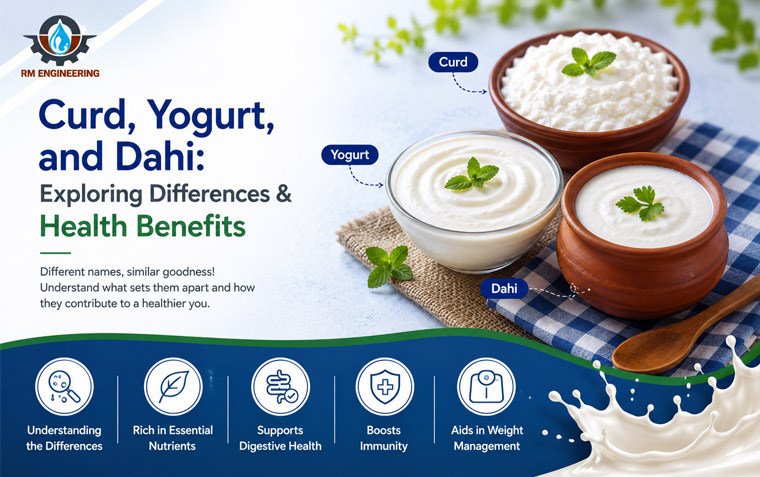
Curd, yogurt, and dahi are among the most popular fermented dairy products enjoyed worldwide for their rich taste, creamy texture, and nutritional value. While they look similar, they differ in bacterial cultures, processing techniques, and industrial production machinery.
1. What is Curd?
Curd is a traditional household staple in India made by curdling milk with natural acidic agents like lemon juice, vinegar, or a small portion of existing curd. The lactic acid bacteria present cause milk proteins (casein) to coagulate, creating a soft, soothing product.
2. What is Yogurt?
Yogurt is produced through standardized industrial fermentation using specific live bacterial cultures—primarily Lactobacillus bulgaricus and Streptococcus thermophilus. The milk is pasteurized, inoculated under precise temperature control (40°C–45°C), and set to achieve a consistent, smooth texture and specific acidity level.
3. Curd vs. Yogurt: Key Differences
| Feature | Curd / Traditional Dahi | Commercial Yogurt |
|---|---|---|
| Starter Culture | Natural starter (previous curd / lemon juice) | Specific strain (L. bulgaricus + S. thermophilus) |
| Fermentation Temp | Ambient temperature (25°C–35°C) | Controlled incubation (40°C–45°C) |
| Texture | Soft, slightly non-uniform whey separation | Uniform, thick, smooth set or stirred |
| Probiotic Standardization | Variable bacterial count | Guaranteed live probiotic count |
Health Benefits of Curd and Yogurt
- Improved Gut Health: Rich in probiotics that balance intestinal flora, enhance digestion, and reduce bloating.
- Bone & Teeth Strength: Excellent source of bioavailable calcium, phosphorus, and vitamin D.
- Immunity Booster: Lactic acid bacteria help strengthen the immune barrier against gastrointestinal pathogens.
- High Protein Content: Provides essential amino acids suitable for daily athletic recovery and dietary weight management.
Industrial Curd & Dahi Production Process
Commercial dairy plants process curd and dahi through automated sanitary equipment:
- Milk Reception & Standardization: Testing raw milk and adjusting fat and SNF content.
- Pasteurization & Homogenization: Heating milk to 85°C–90°C to eliminate unwanted microflora and homogenizing for smooth texture.
- Cooling & Inoculation: Cooling to 42°C and dosing standardized starter cultures in incubation tanks.
- Incubation & Setting: Holding at precise temperature in cups or vats until pH reaches 4.5.
- Rapid Chilling & Cold Storage: Cooling to 4°C to arrest fermentation and lock in shelf stability.