Milk fermentation is a process where lactic acid bacteria
Convert lactose into lactic acid, which thickens the milk and gives it a sour taste to create products like yogurt, kefir, and cheese. fermentation process involves, heating milk/cooling: it by appropriate machine, Batch or automatic means.
Inoculating: adding a starter culture of microorganisms to milk to ferment it, transforming it into products like yogurt, cheese, or dahi. This starter, often containing lactic acid bacteria (LAB), ferments lactose into lactic acid, causing the milk to thicken and coagulate. This process is crucial for creating the texture, flavor, and acidity of fermented dairy products. it with a starter culture, and incubating it for several hours to allow the bacteria to ferment the lactose. The rate and quality of fermentation are influenced by factors like temperature, the specific starter culture, and other processing steps
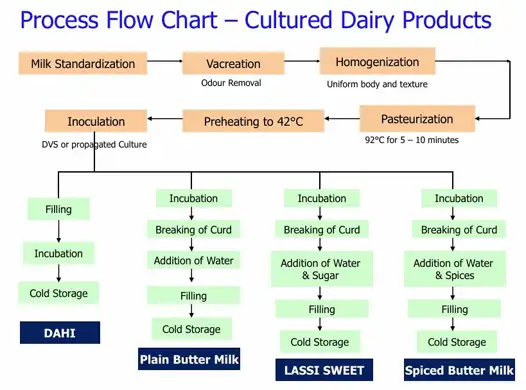
Examples of fermented milk products :
- Yogurt: made with Streptococcus thermophilus and Lactobacillus bulgaricus
- Kefir: Cultured Buttermilk, Lassi, A drink made from fermented milk, water, and sometimes fruit.
- Cheese: A product where milk proteins and fats are fermented and then ripened. fermented milk products Advantage: have antimicrobial, ant mutagenic, ant carcinogenic, and antihypertensive properties as well as provide benefits on mineral metabolism, reduce lactose intolerance symptoms and cholesterol levels.
Fermented dairy products plant Manufacturer
fermented dairy products, but there are some key differences between the two. Curd is a traditional Indian food that is made by curdling milk with an acidic substance, such as lemon juice or vinegar. This process creates a thick and slightly sour product that is similar to yogurt. Curd is often eaten plain, but it can also be used in a variety of dishes, such as smoothies, dips, and desserts. Yogurt is a fermented dairy product that is made by adding a culture of live bacteria to milk. The bacteria ferment the lactose in the milk, producing lactic acid. This process gives yogurt its characteristic tart flavor and thick texture. Yogurt is a good source of protein, calcium, and probiotics, which are beneficial bacteria that can help improve gut health.
FSSAI standard dairy plant
SM Engineering supplies milk fermentation systems built to FSSAI dairy plant standards and suitable for batch or automatic operation. These systems use controlled heating, cooling, inoculation, and incubation to convert lactose to lactic acid via starter cultures, creating the required texture and acidity.
Health and Functional Benefits
The text highlights advantages of fermented dairy Fermented milk products are noted for antimicrobial, antimutagenic, anticarcinogenic, and antihypertensive properties, and support mineral metabolism. They also help reduce lactose intolerance symptoms and cholesterol levels due to active cultures and lactic acid formation.
